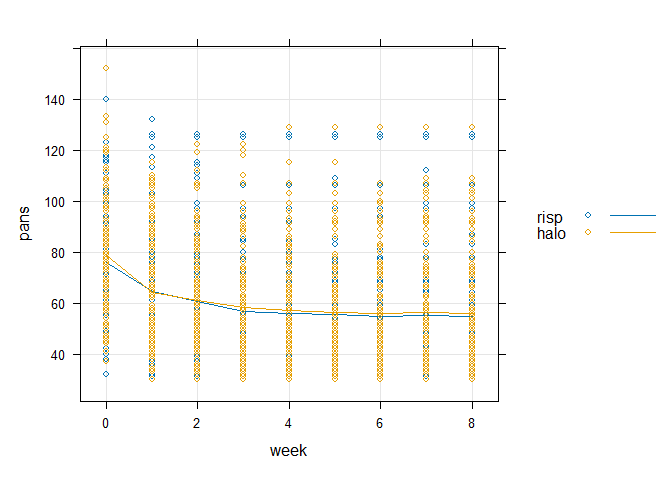
 - What is the sample size in each treatment group?
- Estimate a random slope model
- What are the estimates for the fixed effects and variance
components?
- Fit a model with quadratic time trends for the population and
individual subjects
- Add an interaction with treatment for the linear and the quadratic
effects for week and test them
- Interpret your results: Which model would you choose?
- Refit the model that you chose with a centered week variable:
- Compare the estimates for your fixed effects and the covariance
components
- Which estimates change and why?
### Reference
- What is the sample size in each treatment group?
- Estimate a random slope model
- What are the estimates for the fixed effects and variance
components?
- Fit a model with quadratic time trends for the population and
individual subjects
- Add an interaction with treatment for the linear and the quadratic
effects for week and test them
- Interpret your results: Which model would you choose?
- Refit the model that you chose with a centered week variable:
- Compare the estimates for your fixed effects and the covariance
components
- Which estimates change and why?
### Reference